Many California property owners come to me asking the same question: “Do I need a zoning variance or a conditional use permit?” It’s a common confusion—zoning rules and development standards can feel like a maze. After 20+ years in entitlements, here’s the simple difference: a variance adjusts physical zoning standards, while a Conditional Use Permit (CUP) authorizes a specific land use. This guide breaks down exactly what your project requires.
What Is a Variance Permit?
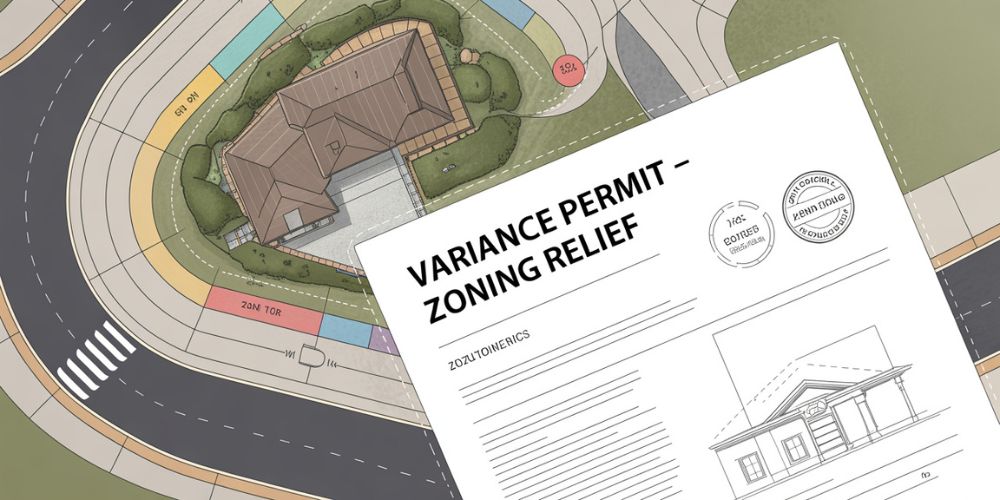
A variance permit provides relief from physical zoning standards when your property has a unique hardship that prevents strict compliance.
This is the core difference in the variance vs conditional use permit discussion:
A variance focuses on physical development standards, not how the property is used.
You typically need a variance when you want to change:
-
- Setback requirements (e.g., building closer to the property line)
- Structure height limits
- Lot coverage or floor area maximums
- Placement constraints due to irregular lot shape or topography
A variance is only granted when:
- There is a unique hardship specific to your lot, and
- Applying the zoning ordinance literally would be unreasonable compared to similar nearby properties
What Is a Conditional Use Permit?

A Conditional Use Permit (CUP) allows a property to be used for a specific activity that is not permitted by right, but may be allowed through additional review and conditions.
This is the main distinction in zoning variance vs conditional use permit comparisons:
A CUP regulates how the property is used — not the building’s physical features.
You typically need a CUP when you want to operate:
-
- Restaurants, drive-thrus, bars, and entertainment uses
- Assembly uses like churches, temples, and community centers
- Daycare centers, private schools, and tutoring centers
- Auto repair shops, car washes, or fuel stations
- Any higher-impact commercial use in a residential or mixed-use zone
To get a CUP, you must show that your proposed use:
- Meets the city’s CUP findings
- Will not negatively impact neighbors
- Is consistent with the city’s General Plan
- Can operate safely with imposed conditions
Also Read: Guide to Zoning and Its Types
Conditional Use Permit vs Variance: The Key Difference
If you’re comparing a conditional use permit vs a variance, remember:
They solve two different problems:
- A variance fixes a physical problem with your site — height, location, setbacks, or size
- A CUP fixes a use problem — meaning the activity you want to operate isn’t automatically allowed
| In short: Use a variance to modify physical standards Use a CUP to request a particular use |
Comparison Table:
| Category | Conditional Use Permit (CUP) | Variance |
| Primary Purpose | Approves a specific land use not allowed by right | Provides relief from physical zoning standards |
| Focus | Use of the property (business/activity) | Design or dimensions of the structure/site |
| Examples | Restaurant, church, daycare, auto repair, gas station, cannabis retail | Setbacks, height limits, lot coverage, floor area ratio |
| Why It’s Needed | Use has potential impacts that require conditions (traffic, noise, parking) | Unique property hardship makes strict standards unreasonable |
| Common Questions | “Can I operate this activity here?” | “Can I build this structure the way I need?” |
| What It Cannot Do | Cannot change height, setbacks, or physical standards | Cannot authorize unpermitted land uses |
| Who Approves It | Zoning Administrator / Planning Commission / City Council | Same bodies, depending on city |
| Review Type | Discretionary (often requires CEQA review) | Discretionary (also may require CEQA review) |
| Typical Conditions | Hours of operation, noise limits, parking requirements, security plans | Compliance with adjusted setbacks, height relief, site constraints |
| Key Legal Basis | “Conditionally permitted uses” listed in the zoning ordinance | Hardship findings required under state/local zoning law |
| Duration | Often permanent, sometimes revocable | Permanent unless ordinance conditions apply |
| Bottom Line | Permission for what you want to do | Flexibility in how you build |
Because of this, planners and entitlement consultants often discuss conditional use vs variance early in the due diligence stage to determine the correct path before submitting your application.
Final Thoughts: Variance vs Conditional Use Permit — Which One Do You Need?
If you’re unsure whether your project requires a zoning variance vs conditional use permit, you’re not alone. Each California municipality has its own criteria, application steps, and findings.
Strom Permit helps California property owners determine the correct path, prepare the right application, and navigate the full discretionary review process — from due diligence to public hearings.