Understanding which environmental document your project requires is one of the most important steps in California’s development and entitlement process. Under the California Environmental Quality Act (CEQA), public agencies must identify, evaluate, and disclose the potential environmental impacts of a project before it can be approved.
The decision between a Negative Declaration (ND), Mitigated Negative Declaration (MND), or a full Environmental Impact Report (EIR) depends on what the Lead Agency identifies during the Initial Study. This study evaluates whether your project may cause significant environmental impacts — and ultimately determines the level of CEQA review required.
Understanding the CEQA Initial Study
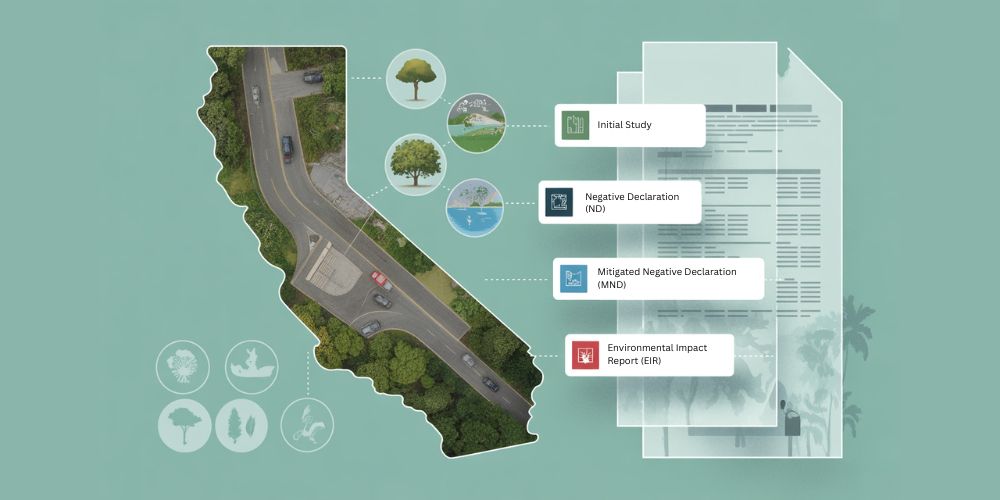
A CEQA Initial Study evaluates whether a project may cause significant environmental impacts. Based on the findings, the Lead Agency will decide which level of CEQA documentation is appropriate:
- Negative Declaration (ND)
- Mitigated Negative Declaration (MND)
- Environmental Impact Report (EIR)
This assessment shapes the entire environmental review process in California.
When a Negative Declaration Is Appropriate
If the Initial Study determines that the proposed project will not result in any significant environmental impacts, the Lead Agency may prepare a Negative Declaration (ND).
In some cases, a project may also qualify for a Categorical Exemption, meaning it falls under a category of activities exempt from CEQA review.
When a Mitigated Negative Declaration Is Required
A Mitigated Negative Declaration (MND) is required when the Initial Study identifies potential significant impacts but determines that all impacts can be reduced to less-than-significant levels through specific mitigation measures.
All mitigation measures must be accepted by the project applicant before the MND can be released for public review.
External Reference:
Governor’s Office of Planning and Research – CEQA Overview
When an Environmental Impact Report (EIR) Is Necessary
If significant environmental impacts cannot be reduced to less-than-significant levels, the Lead Agency must prepare an Environmental Impact Report (EIR). The EIR evaluates:
- Significant environmental effects
- Reasonable project alternatives
- Feasible mitigation measures
- Public comments and responses
Once the EIR is circulated for public review and finalized, the Lead Agency may certify the Final EIR and approve the project.
Statement of Overriding Considerations
If significant and unavoidable impacts remain, the Lead Agency must adopt a Statement of Overriding Considerations, explaining why the project is being approved despite those impacts.
How California Courts Review CEQA Documentation
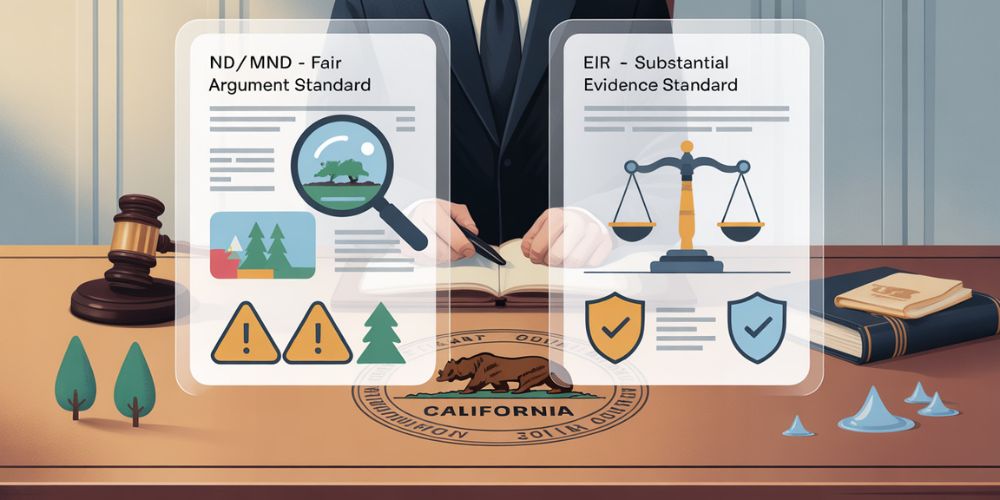
If a CEQA-related legal challenge arises after project approval, the standard of judicial review depends on whether the project was approved with an ND/MND or an EIR.
Negative Declaration or Mitigated Negative Declaration: “Fair Argument” Standard
For projects approved with an ND or MND, courts apply the fair argument standard. This means the court evaluates whether substantial evidence in the record supports a fair argument that the project may cause a significant environmental impact.
If such evidence exists, an EIR may be required.
Environmental Impact Report: “Substantial Evidence” Standard
For projects approved with a certified EIR, courts apply the substantial evidence standard, which is more deferential. Under this standard, a court will uphold the Lead Agency’s decision as long as it is supported by substantial evidence, even if contrary evidence exists in the record.
This makes EIRs more defensible during litigation.
Conclusion
Determining whether a project requires an ND, MND, or EIR under CEQA depends on the results of the Initial Study and the severity of potential environmental impacts. Negative Declarations apply when impacts are insignificant, Mitigated Negative Declarations apply when impacts can be fully reduced through mitigation, and Environmental Impact Reports are required when impacts cannot be avoided or minimized. Understanding these distinctions is essential for project planning in California, especially when navigating public review requirements, agency coordination, and potential legal challenges. Working with professionals who understand CEQA can help ensure a smoother approval process and reduce risks related to delays or litigation.
At Strom Permit, we help California property owners, developers, and planners navigate CEQA, including Initial Studies, MND mitigation packages, EIR coordination, and agency negotiations. If you’re unsure which environmental document your project needs, our team can guide you through the process and help reduce delays, risk, and legal exposure.